
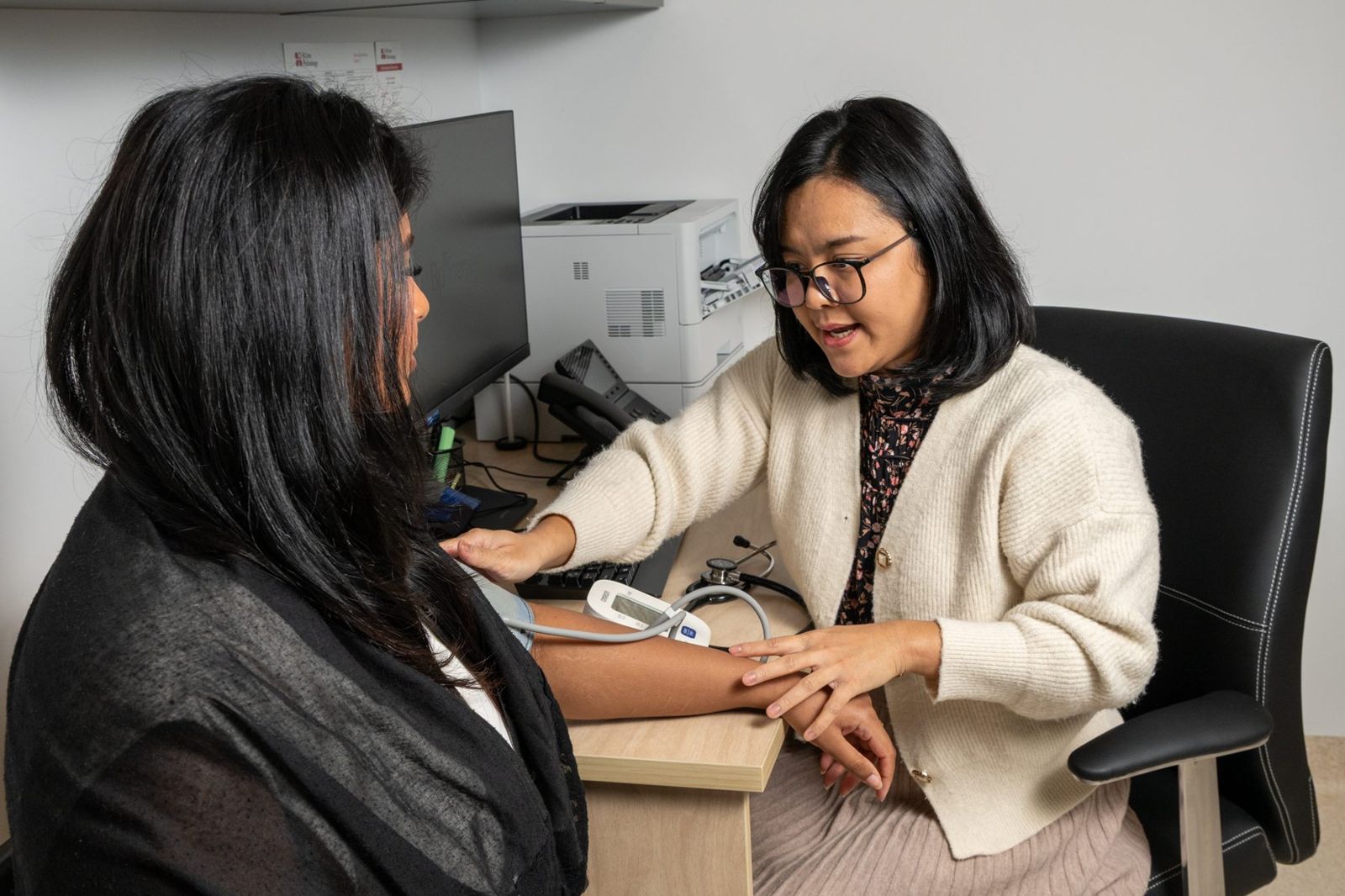
If you're noticing changes in your periods, sleep or mood and wondering what's going on, here's what perimenopause involves, when to book an appointment, and how our GPs can support you through it.
What is perimenopause?
Perimenopause, sometimes called the menopause transition, is the phase leading up to menopause. Your ovaries gradually produce less oestrogen, and hormone levels go up and down rather than falling smoothly, which is why symptoms can come and go.
It usually begins in your 40s, though it can start earlier or later. On average it lasts around 4 to 6 years, but anywhere from a couple of years to a decade is normal. It ends once you've gone 12 months without a period.
It's still possible to become pregnant during perimenopause, so talk to your GP about contraception if this is relevant to you. You don't need a specialist referral to get started: your GP can support you through this stage.
Perimenopause symptoms to look out for
- Irregular periods: cycles that become shorter, longer, heavier or less predictable
- Hot flushes and night sweats: sudden waves of heat, sometimes disrupting sleep
- Mood changes: including irritability, low mood or anxiety
- Sleep difficulties: trouble falling or staying asleep
- Brain fog: trouble concentrating or finding words
- Joint aches and vaginal dryness: less often discussed, but common
When to see your GP
There's no need to wait until symptoms become severe. Book an appointment if:
- Your periods have become noticeably irregular or heavier
- You're having hot flushes, night sweats or sleep disturbance
- Mood changes or anxiety are affecting your relationships, work or wellbeing
- You're unsure whether what you're feeling is perimenopause or something else
Some bleeding patterns are worth checking at any age, particularly bleeding that's very heavy, happens between periods, or happens after 12 months without one.
How is perimenopause diagnosed?
For most women, it starts with a conversation, not a test. Because hormone levels fluctuate, a single blood test often isn't reliable, so your GP will usually diagnose based on your age, symptoms and period pattern. A blood test may still help in some situations, particularly if you're under 45.
What to expect at your appointment
- Your symptoms: periods, sleep, mood, hot flushes and anything else you've noticed
- Your health history: including relevant family history
- Ruling out other causes: such as thyroid problems, which can cause similar symptoms
- Your options: from lifestyle changes to treatment, based on what matters to you
If you'd prefer to see a female GP, just mention it when you book.
Managing perimenopause symptoms
There's no one-size-fits-all approach. Menopausal hormone therapy (MHT), sometimes still called hormone replacement therapy, can be considered for troublesome symptoms, but it isn't suitable for everyone, including some women with a history of hormone-related cancers. Your GP can talk through whether it suits you, along with non-hormonal options and lifestyle changes. Jean Hailes for Women's Health is a good place to read more between appointments.
Book online or call (03) 4714 8400 when you're ready.
The information in this article is general in nature and isn't a substitute for personalised medical advice. If you're concerned about your health, book an appointment with your GP at Kilmore Village Medical or call (03) 4714 8400.